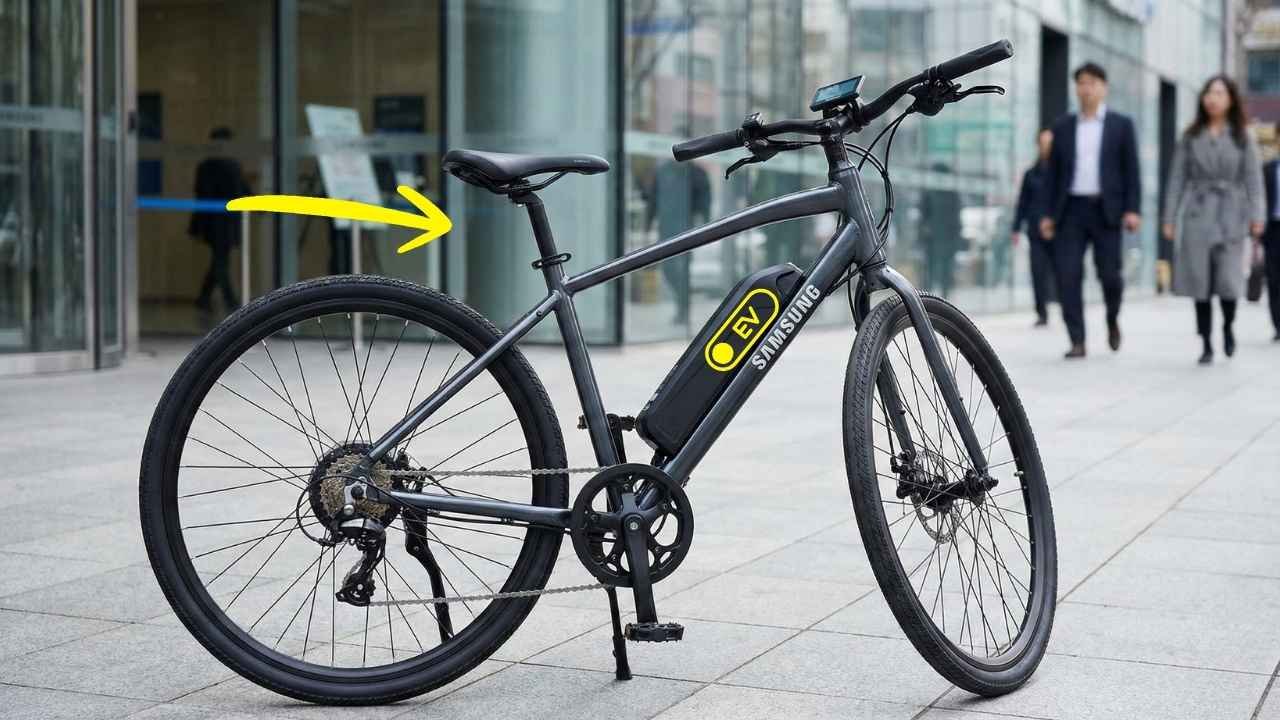
Samsung Electric Cycle: Imagine cutting your daily commute cost down to pennies while dodging traffic on a device that costs less than a budget smartphone. That is the promise currently making waves across the tech and automotive sectors. Reports are circulating that Samsung, the South Korean tech giant known for Galaxy phones and smart TVs, is preparing to enter the Indian electric vehicle market.
But they aren’t starting with a car or a scooter. The buzz suggests a game-changing electric cycle with specs that seem almost too good to be true: a 150 km range and a starting price tag of just ₹2,599.
If these rumors hold weight, this isn’t just a new product launch; it is a potential disruption of the entire personal mobility sector. For students, delivery professionals, and daily office commuters, this could offer a practical escape from rising fuel costs and crowded public transport. Here is a deep dive into what we know about this mysterious e-cycle and whether it can live up to the hype.
The Price Tag That Broke the Internet
The headline-grabbing detail here is undoubtedly the price. At ₹2,599 (roughly $30 USD), this figure is significantly lower than even the most basic non-electric bicycles currently on the market, let alone an advanced e-cycle.
This pricing strategy has sparked intense debate and speculation. Is it the full price? Is it a down payment or booking fee? Or perhaps it is a monthly subscription cost for a battery-as-a-service model?
If Samsung manages to price a functional e-cycle anywhere near this bracket, it signals an aggressive intent to capture market share immediately. It would make electric mobility accessible to millions of people who previously found electric scooters (priced between ₹70,000 and ₹1.5 lakh) out of reach.
A Massive Leap in Range
Range anxiety is the number one reason people hesitate to buy electric vehicles. You don’t want to be stranded halfway home with a dead battery.
Most e-cycles currently available in India offer a range between 30 km to 50 km on a single charge. Some premium models push this to 80 km. However, reports suggest the Samsung e-cycle could boast a massive 150 km range.
To put that in perspective, a 150 km range allows a rider to:
- Commute 20 km to work and back for three days without charging.
- Handle a full day of food deliveries without swapping batteries.
- Take long weekend rides to the outskirts of the city.
Even if real-world conditions (traffic, rider weight, and road grade) bring this number down to 100 km or 120 km, it would still be a best-in-class performance that outshines competitors costing ten times as much.
Built Tough for Rough Roads
India’s roads are famous for their unpredictability. From sudden potholes to gravel patches, a commuter cycle needs to be more than just cheap; it needs to be indestructible.
Leaks suggest that Samsung is designing this specifically for these conditions. We aren’t looking at a delicate, slim-frame European city bike. Instead, the design philosophy seems to lean toward rugged utility.
Sturdy Frame
The chassis is expected to be built from high-tensile steel or a heavy-duty alloy capable of withstanding rough urban and rural terrain. This durability is essential for the Indian market, where a cycle is often a primary mode of transport rather than a leisure vehicle.
Fat Tires and Suspension
Stability is safety. The rumor mill indicates the inclusion of “fat tires”—wider than standard tires to provide better grip on uneven surfaces and wet roads. Combined with an effective suspension system, this setup would absorb shocks from potholes, ensuring the rider’s spine doesn’t take the impact.
Smart Features: The Samsung Advantage
If you buy a bike from a traditional cycle manufacturer, you get a bike. If you buy one from Samsung, you expect a gadget. This is where the tech giant has a distinct upper hand over legacy cycle brands.
We can anticipate a connected ecosystem where your phone and your bike talk to each other. Potential smart integrations could include:
- GPS Tracking: A massive benefit for anti-theft security.
- Battery Health Monitoring: Check how much range you have left via a smartphone app.
- Ride Analytics: Track your speed, distance, and calories burned.
- Digital Locking: Unlocking your bike via Bluetooth or NFC, similar to how Samsung Pay works.
These features transform the cycle from a mechanical tool into a smart device, adding value that goes beyond just getting from point A to point B.
The Power Source: Battery Expertise
Why do people believe the 150 km range claim? Because of Samsung SDI.
Samsung is one of the world’s leading manufacturers of lithium-ion batteries. They supply batteries for everything from smartphones to electric cars for major global automakers. If anyone can squeeze more energy into a smaller, lighter, and safer pack, it is them.
The cycle will likely feature a high-density lithium-ion battery. A key feature to look out for is a removable battery pack. In a country where apartment living is common and street-level charging points are rare, the ability to carry your battery upstairs and charge it in a standard wall outlet is a necessity, not a luxury.
Rumored Variants and Specifications
While details are still emerging, industry chatter suggests a tiered launch with different models catering to different needs.
| Variant | Estimated Status | Key Features |
|---|---|---|
| Standard | Rumored @ ₹2,599 | The entry-level model. Likely focused on essential commuting with a solid 100-120 km range. |
| Pro | To be announced | Expected to feature the full 150 km range, better suspension, and enhanced smart connectivity. |
| Pro Max | To be announced | The premium tier. Likely includes alloy wheels, advanced GPS tracking, and the fastest charging capabilities. |
Pros and Cons: A Reality Check
Before getting too excited, it is important to weigh the potential upside against the uncertainties.
The Pros:
- Affordability: The price point is revolutionary.
- Brand Trust: Samsung implies a level of quality control often missing in cheap generic e-bikes.
- Range: 150 km removes the fear of running out of power.
- Smart Tech: App integration makes ownership easier and safer.
The Cons:
- Vaporware Risk: Until an official launch event occurs, these are just rumors.
- Pricing Clarity: The ₹2,599 price is highly suspicious and may be a marketing gimmick or a partial payment.
- Real-World Testing: A 150 km range on paper often translates to less on the road.
Is It Worth the Wait?
If Samsung delivers on even half of these rumors, the Indian EV market is in for a shock. An electric cycle offers the fitness benefits of cycling with the motorized assist needed to arrive at work without being drenched in sweat.
For now, we have to wait for an official statement. But for millions of commuters tired of petrol price hikes and traffic jams, the Samsung e-cycle represents a very hopeful possibility.
Frequently Asked Questions
1. Is the Samsung electric cycle officially launched?
No, Samsung has not officially confirmed the launch. The current information is based on leaks, industry reports, and rumors circulating in tech and auto news outlets.
2. Is the ₹2,599 price tag real?
It is highly unlikely that ₹2,599 is the full final price for a high-spec electric cycle. This figure is likely an introductory offer, a pre-booking amount, or a monthly subscription fee.
3. How is a 150 km range possible on a bicycle?
Samsung’s division, Samsung SDI, is a global leader in battery technology. By utilizing high-density cells and efficient motor management, achieving a 150 km range is technically possible, though likely in ideal riding conditions (Eco mode).
4. Will I be able to charge the battery at home?
Yes, mostly all e-cycles in this segment support charging via standard 5A or 15A home sockets. A removable battery feature is highly probable, allowing for easy indoor charging.
Also Read: Nokia 215 Returns in The Market With 4G+UPI & WhatsApp on a Feature Phone, Priced at Just ₹2,599
1 thought on “150KM per Charge? Samsung’s Electric Cycle Challenges the Future of City Transport.”